
Spice Jar RFQs: Identify the Lid Sealing Parts
For a spice jar lid enquiry, ask the supplier to identify the sealing component, its seating location and the lid and body versions that belong together. Request a marked component view and a supplier material statement tied to that version. Keep the component identification separate from any sealing-performance claim. A catalogue illustration can identify the proposed arrangement, but it does not establish an independently tested airtight result or a particular food-contact approval.
Supplier-published catalogue reference. Styled props and advertising statements do not establish commercial inclusions, a construction detail or an independently verified performance result.
Identify the lid assembly in the offered version
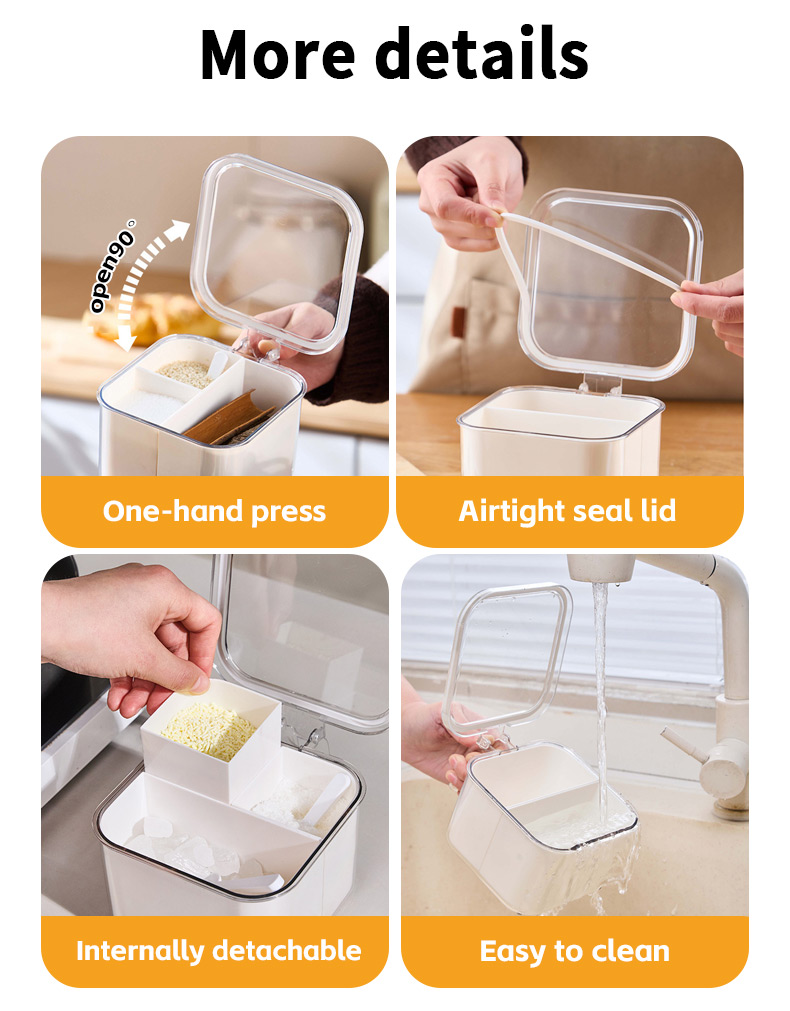
Yueran publishes a Spice Jar with a press-opening lid and a structured PP, PET and silicone material description. Its gallery includes a detail view in which a flexible ring is shown beside the lid. This gives the buyer a useful starting point for a component enquiry. It does not, by itself, map every listed material to a named part or establish which replacement components are offered commercially.
Use the official spice jar listing to identify the product and connect it to the actual supplier quotation. Ask the supplier to confirm the lid, sealing component and body references covered by that offer. Retain the manufacturer terminology alongside buyer labels. Two parts that look similar in a catalogue should not be treated as interchangeable without supplier confirmation for the selected version.
Request a marked component and contact map
Ask for a marked drawing or photograph naming the sealing component and the surface against which it is intended to sit. Request a clear distinction between the lid housing, any removable sealing part and the jar body. The purpose is to identify the assembly supplied, rather than to infer a maintenance procedure from a marketing illustration. Ask the supplier to state any version limitations or unresolved details in the same response.
Keep each relevant interface visible in the record. For example, the seating location of a flexible component and its contact with a closing surface are related but different references. Ask the manufacturer to mark them on its own drawing. Do not invent a cross-section, groove size, compression value or installation direction from a front view. A supplier-marked component map is more useful than an unlabelled image accompanied by a general sealing claim.
Supplier-published catalogue reference. Styled props and advertising statements do not establish commercial inclusions, a construction detail or an independently verified performance result.
Tie material descriptions to actual parts
The catalogue lists PP, PET and silicone together. Ask which listed material applies to each named part of the offered jar assembly. Where a material description is incomplete, leave that field open for the manufacturer reply. Do not infer a grade, additive package or food-contact status from the broad material name. A component-material table should retain the supplier statement and identify the version to which it applies.
Keep supporting documents associated with their actual scope. A document about one material or component does not automatically describe every part in the finished assembly. If the buyer needs additional product information for the intended market or use, request it from the responsible supplier and review it through the appropriate process. This article does not supply regulatory requirements or treat a material label as proof that those requirements have been met.
Buying field
Requested supplier response
Product reference
Offered spice jar and supplier quotation revision
Lid reference
Actual housing and closing assembly identified
Sealing component
Supplier name, part reference and marked position
Contact interface
Lid seat and body contact surface distinguished
Material mapping
Supplier statement for each named component
Document scope
Actual part and version covered by a supplied record
Changes
Revised part references and compatibility confirmation
Separate component identity from sealing evidence
Supplier catalogue language about a seal describes the product presentation. If the purchase requires a specific sealing evaluation, agree the intended conditions, responsibility and acceptance requirements separately. Request an actual record only for the assembly evaluated. Do not convert an image of a flexible ring into a leakage rate, storage-life promise, moisture-protection result or claim that spices will remain in a particular condition for a stated period.
A sample can help establish whether the supplied parts match the component map. Record the sample identifier and the lid, body and sealing component references reviewed together. Describe any observed mismatch without assigning an unsupported cause. If the supplier proposes a different component after the review, ask for a revised identification record and clarify whether the earlier sample or any separate evaluation still represents the new proposal.
Supplier-published catalogue reference. Styled props and advertising statements do not establish commercial inclusions, a construction detail or an independently verified performance result.
Control replacement and receiving references
Ask whether separate sealing components are offered only when replacement supply is part of the enquiry. Availability and compatibility remain supplier confirmations. Do not turn a removable-looking component in a gallery image into a promise of spare-part supply or a buyer instruction to remove it. Where the manufacturer provides handling or replacement guidance, retain the applicable document and version rather than reconstructing a procedure from the picture.
Before ordering, keep the component map, part-material statements and the supplier offer together. At receipt, compare the identified assembly and any separately ordered components with that record. Distinguish a missing part, a different reference and a visible condition concern. This makes the enquiry actionable while preserving a clear boundary between what the supplier has identified, what the buyer has reviewed and what any actual performance record establishes.
Buyer FAQ
Does the catalogue material list identify every lid part?
No. Ask the supplier to map its PP, PET and silicone descriptions to named components in the actual offered assembly.
Does a seal illustration establish an airtight test result?
No. It identifies a catalogue arrangement. Any required performance evaluation needs a defined scope and actual evidence for the relevant assembly.
Can a pictured removable ring be ordered separately?
Ask the supplier. Separate availability, the applicable part reference and compatibility with the selected lid and body must be confirmed in the offer.
Supplier response checklist
Exact offered product, component and version references
Supplier-marked description and identified sample scope
Confirmed statements separated from pending questions
wholesale spice jarsB2B supplier sample record